French experts in welding and cutting technologies
Find out about our 6 welding technologies
The Industry of the Future
Our industrial plant is located in Juvigny in France
Seamless ultrasonic welding of nonwoven fabrics from lab to high-volume lines
Nonwoven fabrics are everywhere – from medical masks to automotive interiors – and their performance depends on how reliably they can be assembled. Ultrasonic welding has become the preferred method for joining these materials, offering speed, cleanliness, and durability without the need for adhesives or stitching. Its ability to bond delicate fibers without damaging them makes it indispensable in industries where hygiene, strength, and precision are key.
The growing importance of ultrasonic welding in nonwovens
Nonwoven fabrics are engineered materials composed of fibers bonded together rather than woven or knitted. They are widely used because they are lightweight, breathable, and versatile. However, their structure is often too delicate for conventional joining methods like sewing or thermal sealing. Adhesives may leave residues, stitching can puncture the fabric, and heat sealing can cause deformation or burns.
Ultrasonic welding overcomes these problems by using vibration and pressure to bond fibers at specific points or along continuous seams. The result is strong, clean, and repeatable joints that preserve the functional properties of the fabric. This makes the technology especially valuable in healthcare, filtration, hygiene, and automotive applications.
The science behind ultrasonic bonding of nonwoven fabrics
The principle of ultrasonic welding is to create bonds without thread, glue, or chemical additives. Instead, high-frequency vibrations and controlled force create heat at the fiber interface, fusing the materials together.
Vibration and pressure creating localized heat
The process begins with an ultrasonic generator producing high-frequency electrical energy, usually between 20 and 40 kHz. A transducer converts this energy into mechanical vibrations, which are then transmitted through a horn. When the horn presses against the fabric supported by an anvil, the localized friction generates just enough heat to melt fibers at the interface and fuse them together.
Precision bonding that protects delicate structures
Unlike thermal sealing, ultrasonic welding applies energy only where it is needed, leaving surrounding areas unaffected. This is critical for nonwovens fabrics, which can easily deform under excess heat. The method produces neat, narrow seams that are both visually appealing and mechanically strong.
Customization through patterns and tooling
The anvil roll or welding horn can be designed with specific patterns to create decorative seams, embossing, or perforations while still bonding the fabric. This flexibility allows manufacturers to combine functionality with aesthetics in applications like disposable garments or consumer goods.
Key benefits driving adoption in nonwoven manufacturing
Ultrasonic welding delivers a wide range of advantages that explain its growing use in nonwoven manufacturing. These benefits cover hygiene, efficiency, durability, and sustainability.
Beyond simply replacing traditional methods, it enables new production possibilities by combining functionality, design, and cost efficiency in a single process. As industries look to scale up production while maintaining quality, these advantages become decisive.
- The process eliminates the need for adhesives or threads, which means there are no added chemicals that could contaminate medical products or filtration media. This makes it ideal for sterile or sensitive environments.
- The welds are strong and durable, resisting tearing or fraying even in thin and lightweight fabrics. This mechanical reliability ensures long-term performance in demanding applications like automotive interiors or protective clothing.
- Welding cycles are extremely fast, often completed in fractions of a second. This makes the process highly suitable for mass production, where millions of items such as masks or hygiene products must be manufactured daily.
- Ultrasonic welding is energy efficient and produces minimal waste. Because it does not require consumables like thread or glue, it helps reduce production costs and aligns with sustainability initiatives.
- The process allows decorative or functional patterns to be integrated into seams, combining aesthetics with functionality. This flexibility is particularly valued in consumer and hygiene products.
Expanding applications across multiple industries
Nonwoven fabrics appear in many industries, and ultrasonic welding adapts to each with specific advantages. From medical devices to everyday products, the technology ensures precision, hygiene, and durability.
Each industry values the process for slightly different reasons, but the common denominator is reliability and speed. By addressing both functional and regulatory needs, ultrasonic welding is becoming a standard manufacturing solution across sectors.
Medical fabrics where sterility is non-negotiable
In healthcare, ultrasonic welding is indispensable for producing items such as surgical masks, gowns, drapes, and filter media. The absence of adhesives eliminates contamination risks, and the precision of the process ensures that seams remain airtight or liquid-tight. This is essential for meeting strict regulatory standards while guaranteeing patient safety.
Hygiene goods designed for comfort and reliability
Products like diapers, sanitary pads, and disposable wipes rely on nonwoven fabrics that must be assembled quickly and consistently. Ultrasonic welding allows manufacturers to produce soft, reliable seams without affecting comfort. Decorative seam patterns can also be integrated, adding functionality without compromising on aesthetics.
Automotive interiors combining strength and safety
In the automotive sector, nonwoven fabrics are used in headliners, seat covers, door panels, and sound-absorbing materials. Ultrasonic welding ensures that these fabrics are bonded securely without adhesives that could release volatile compounds. The result is strong, durable assemblies that also contribute to passenger comfort and safety.
Filtration products requiring airtight precision
Filters for air, liquids, and industrial processes often rely on nonwoven fabrics. Ultrasonic welding creates airtight and particle-free seams that do not compromise filtration efficiency. From cleanroom filters to vacuum cleaner bags, the process ensures consistent performance in sensitive applications.
Advanced equipment enabling ultrasonic nonwoven welding
The success of ultrasonic welding depends on well-designed equipment that balances energy delivery, pressure, and seam design. Each component of the system plays a role in achieving clean and consistent welds.
Modern machines are increasingly digital, integrating sensors and automation to make the process more precise and easier to monitor. This not only improves quality but also allows manufacturers to meet strict traceability standards in regulated industries.
- The ultrasonic generator provides high-frequency electrical energy, and modern digital generators include automatic frequency tracking and quality monitoring functions that stabilize performance.
- The transducer and booster convert the electrical signals into vibrations and adjust amplitude to the correct level, ensuring that fibers are bonded without damage.
- The welding horn delivers vibrations directly to the fabric, and its shape can be adapted for continuous seams, spot welds, or decorative embossing.
- The anvil roll supports the fabric during welding and can be engraved with custom patterns, making it possible to create perforations or decorative seams in addition to functional bonds.
- The actuator applies controlled pressure during welding, ensuring that the seam is consistent across the entire bond length. Servo-electric actuators provide the precision needed for delicate or thin nonwovens.
- Monitoring systems track key parameters such as amplitude, pressure, and displacement, recording data to ensure that every weld meets regulatory and quality standards.
Smart design strategies for stronger nonwoven assemblies
Designing with ultrasonic welding in mind ensures that nonwoven products meet both functional and aesthetic goals. Proper planning improves seam quality and production efficiency.
This stage is critical because even the most advanced equipment cannot compensate for poorly designed parts. A product designed with ultrasonic welding in mind from the outset will perform better, last longer, and be more cost-effective to manufacture.
- Choosing compatible nonwoven materials is essential because thermoplastic fibers such as polypropylene and polyester respond best to ultrasonic vibrations. Blends with insufficient thermoplastic content may require adjustments or additional processing.
- Designing seams with the correct geometry ensures that vibrations focus precisely where bonding is needed. Narrow seams and energy concentrators can improve weld strength while preserving fabric breathability.
- Controlling welding parameters such as amplitude, speed, and pressure allows manufacturers to adapt the process to different fabric thicknesses and end uses. Optimized parameters prevent burn-through or weak joints.
- Incorporating decorative or functional patterns in anvil rolls adds versatility, enabling the creation of embossed seams, ventilation holes, or branding marks without additional steps.
Mecasonic equipment for ultrasonic welding of nonwoven fabrics
Nonwovens fabrics require fast, hygienic seams that preserve hand-feel and breathability. Mecasonic aligns a complete range of ultrasonic welding hardware: presses, power sources, tooling, and motion hardware. These solutions ensure that spot bonds, hems, and short continuous seams run cleanly from pilot benches to multi-lane lines.
Mecasonic’s application teams qualify settings on real media. Horn faces are finished to reduce marking, anvil patterns are tuned to maintain airflow, and sample seams are verified for strength and appearance. Recipes are then transferred intact to production and supported with training and service.
The press platform provides the motion baseline and carries programs across formats. Selection depends on control depth and plant governance:
- Omega 4 A+ handles day-to-day tacks and edges with simple setup and calm, repeatable travel.
- Omega 4 S introduces adaptive modes for thin webs and multilayers, tightening windows on sensitive hygiene materials.
- Omega 4 X adds extended programmability and factory connectivity where audited data and line analytics are required.
- Omega 4 E delivers quiet, precise servo-electric movement suited to cleanrooms and low-noise areas.
Tooling translates vibration into soft, tidy seams. Custom horns follow the fabric path and seam motif, while dedicated anvils support discreet spots, narrow hems, or embossed lines. Energy is focused at the interface so strength rises without crushing fibers.
Power units keep the acoustic side stable during long runs. Changeovers remain quick and low-risk when styles or patterns shift:
- Pulse Touch offers a touchscreen HMI, automatic resonance tracking, and amplitude profiling to stabilize delicate nonwovens.
- Pulse One fits compact panels with straightforward I/O and steady output for continuous sealing.
Station mechanics scale throughput without redesigning the cell. The choice reflects space and access needs:
- ML 40 indexes along larger panels with long, accurate travel for successive seams.
- ML 32 serves tight fixtures with short, controlled strokes around confined geometries.
- UBC provides a small-footprint axis for reliable horn and anvil positioning.
For volume production, enclosed cells lift parts-per-minute while protecting operators and surfaces. Sound-damped cabins with indexing or rotary tables and multi-head tooling contain noise, keep seams consistent, and simplify growth from single-lane to multi-lane operation.
Our technologies
To meet our customers’ needs, we’ve developed different techniques which are specific to each field of application and adaptable to each project. We now offer ultrasonic, spin, hot air/thermal, hot plate, vibration and laser welding solutions.






Our fields of application
Our leadership in plastic welding and ultrasonic cutting comes from our ability to innovate and meet the expectations of our customers in sectors like the automotive industry, cosmetics, household appliances, electronics, recreation and leisure, medicine, packaging and the textile industry as well as in non-ferrous metals, the agrifood industry and many more.
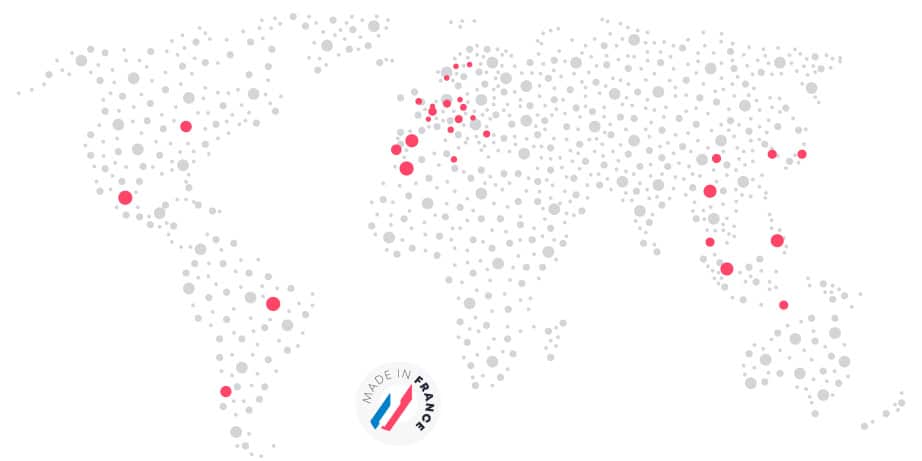
Made in France
All of our products are devised, designed and manufactured at our French site located in Juvigny in Haute Savoie. This is to make sure we offer products of exceptional quality.
We manage all of our business in local and international markets from this site. The presence of various partners on all the continents means we can extend our area of action and offer you effective local services anywhere in the world.
We’re ready for your future
A member of the Industry of the Future Alliance and recognized as suppliers of industry 4.0 solutions, we’re also stakeholders committed to the future 4th industrial revolution.