French experts in welding and cutting technologies
Find out about our 6 welding technologies
The Industry of the Future
Our industrial plant is located in Juvigny in France
Thermoplastic welding driving innovation in industry
Thermoplastic welding is the process of joining plastic parts by applying heat, pressure, or vibrations until their surfaces fuse into a single piece. It has become an essential technique across industries that rely on lightweight, durable, and cost-effective plastic components. From automotive fuel tanks to medical devices and packaging, this operation ensures strong, leak-proof, and clean connections without adhesives or fasteners.
The importance of welding in thermoplastic assemblies
Thermoplastics are widely used because they are lightweight, corrosion-resistant, and easy to process. However, most products require more than one part to be joined, and the method of assembly plays a critical role in determining overall quality and performance. Traditional joining methods such as screws or adhesives often compromise strength, add extra costs, or introduce contamination risks.
Welding solves these issues by creating a homogeneous bond between parts. Because the material itself forms the joint, the resulting connection is as strong and durable as the base plastic. This makes welding essential in sectors where performance and safety are non-negotiable, such as automotive, aerospace, healthcare, and consumer goods.
The main principles behind thermoplastic welding
At its core, thermoplastic welding is based on the principle of heating the surfaces of two plastic components until they soften and then pressing them together to form a solid bond. Different methods exist, each using a distinct energy source, but all share the goal of producing joints without adhesives or mechanical fasteners.
Heat and pressure combining to form bonds
The most fundamental principle is that thermoplastics soften when heated above their glass transition or melting temperature and resolidify upon cooling. Welding takes advantage of this property by applying heat only to the interface and then pressing the parts together. The molecular chains from each surface intermingle, creating a bond as strong as the original material once cooled.
Energy delivery methods adapting to applications
Various methods exist to generate the heat needed for welding. Some rely on direct heat, such as hot-plate welding, while others use friction, like vibration welding, spin welding or ultrasonic welding. Advanced techniques, such as laser or infrared welding, provide high precision for delicate or complex components. Each method offers unique benefits depending on material type, part geometry, and production speed.
Why process control ensures repeatability
Temperature, pressure, and time must be carefully controlled to produce consistent welds. Automated systems with sensors and monitoring tools are increasingly used to maintain quality. These controls ensure that the process is not only repeatable but also traceable, which is essential in industries with strict regulatory standards.
Common thermoplastic welding techniques
Different applications demand different welding techniques. Each method has its advantages and limitations, making the selection process a key step in product design and manufacturing.
Hot-plate welding for large and simple joints
Hot-plate welding uses a heated platen to soften the surfaces of the parts before they are pressed together. It is ideal for large components like automotive fuel tanks or pipes where flat or simple geometries dominate. The process creates strong, airtight joints but requires longer cycle times compared to faster methods.
Vibration welding for high-strength joints
Vibration welding generates heat through friction by rapidly moving one part against another under pressure. This method is suited for larger assemblies with complex geometries, such as intake manifolds or appliance housings. It produces strong and reliable joints, though the process may leave visible weld lines that limit use in aesthetic applications.
Ultrasonic welding for delicate and precise assemblies
Ultrasonic welding applies high-frequency vibrations through a horn to create localized heating at the joint. It is particularly effective for small, precise parts such as medical devices, electronics housings, and filters. The process is fast, clean, and energy-efficient, though it is best suited for smaller weld areas.
Laser and infrared welding for advanced applications
Laser and infrared welding deliver energy directly to the weld interface with high precision. These methods allow joining of complex geometries, transparent parts, or sensitive components without mechanical stress. They are used in automotive lighting, consumer electronics, and medical equipment, where aesthetics and precision are as important as strength.
Spin welding for circular parts
Spin welding involves rotating one part against another until friction generates enough heat to bond the surfaces. It is used primarily for circular parts like containers, filters, and caps. The process is simple, fast, and reliable, but limited to rotationally symmetric designs.
Benefits that make thermoplastic welding indispensable
The widespread adoption of thermoplastic welding is not only due to cost savings but also because it delivers unique technical advantages. These benefits span structural strength, process efficiency, and sustainability.
- Welding creates homogeneous joints that are as strong as the base plastic, eliminating weak points often seen with adhesives or fasteners.
- The process is clean and does not introduce foreign materials, which is essential in medical, food, or filtration applications where contamination must be avoided.
- Cycle times are short, particularly with ultrasonic or vibration welding, making it possible to meet high-volume production requirements.
- Welding equipment can be automated and integrated into production lines, reducing labor costs and improving consistency.
- The absence of consumables such as screws, adhesives, or solvents lowers material costs and minimizes environmental impact.
- Many welding methods allow for flexible designs, enabling complex geometries, hermetic seals, or decorative seams.
Applications of thermoplastic welding across industries
The versatility of thermoplastic welding means it is found in nearly every industry that uses plastics. Each sector values the process for slightly different reasons, but all share the goal of reliability and performance.
Automotive components requiring durability
The automotive industry uses thermoplastic welding extensively in components such as fuel tanks, intake manifolds, bumpers, headlamp housings, and interior panels. Welding ensures joints that can withstand vibration, temperature changes, and exposure to chemicals. The method supports the industry’s push for lightweight, cost-effective designs without compromising safety.
Medical devices demanding sterility
Medical products such as IV filters, blood collection devices, surgical instruments, and diagnostic cartridges often rely on ultrasonic or laser welding. These methods create clean and precise joints without adhesives that could contaminate fluids or compromise sterility. Consistency and traceability are critical in this sector, making advanced monitoring systems an essential part of the process.
Consumer electronics prioritizing precision
In consumer electronics, welding provides seamless joints for housings, connectors, and small components. Ultrasonic and laser welding offer the precision needed for thin walls and delicate structures, while maintaining the sleek appearance expected in consumer products.
Packaging and consumer goods balancing cost and speed
For packaging, caps, bottles, blister packs, and disposable items, welding offers fast and economical assembly. Spin welding and ultrasonic methods dominate here because they combine short cycle times with reliable seals, ensuring both performance and cost control.
Aerospace and industrial applications requiring reliability
In aerospace and industrial sectors, welding is used for ducts, housings, and structural parts where reliability is critical. Vibration and infrared welding provide the robustness needed in environments that face thermal cycling, vibration, and mechanical stress.
Equipment used in thermoplastic welding
The performance of thermoplastic welding depends not only on the chosen technique but also on the quality of the equipment. Each component of the system plays a role in delivering energy, applying pressure, and monitoring results.
- Generators convert electrical energy into the specific form needed for welding, whether ultrasonic, infrared, or laser. Advanced systems adapt automatically to ensure stable performance.
- Converters and boosters in ultrasonic welding systems convert electrical signals into mechanical vibrations and adjust amplitude to the correct level.
- Welding horns or plates deliver energy to the part interface, and their design is tailored to the part geometry and material.
- Actuators apply controlled pressure, whether through pneumatic, hydraulic, or servo-electric systems, ensuring repeatable results across cycles.
- Anvils, fixtures, or tooling support the parts and align them precisely during welding, which is essential for consistent seam quality.
- Monitoring systems track parameters such as displacement, pressure, or temperature, recording data to ensure compliance and quality assurance.
Design considerations for stronger plastic welds
Designing parts with welding in mind ensures better performance, reduces defects, and streamlines production. This requires careful planning at both material and geometry levels.
- Selecting compatible materials is essential, as welding works best when both parts are made of the same or compatible thermoplastics. Material blends may require testing or special adjustments.
- Creating joint designs that concentrate energy at the weld interface improves efficiency. Features like energy directors in ultrasonic welding or flat surfaces in hot-plate welding enhance consistency.
- Controlling weld dimensions is important, since excessive overlap or thickness can lead to weak or uneven joints. Proper design ensures both strength and aesthetic quality.
- Accounting for production variability through tolerance analysis helps reduce defects, especially in high-volume production.
- Planning for inspection and validation ensures joints meet regulatory or safety standards, with pull tests, leak tests, or visual inspections commonly used.
Mecasonic premium solutions for industrial thermoplastic welding
Thermoplastic welding succeeds when motion is stable, energy is consistent, and tooling fits the part. Mecasonic brings these pieces together from pilot runs to high-volume lines. Programs transfer cleanly between stations. Cycle times stay short and seams remain tidy.
Decades of field work shape this offer. Application engineers run trials on real parts, optimize horn faces with simulation, and lock process windows with measured data. Training, audits, and on-site support keep results steady as materials, colors, and shift teams change.
The press platform is the foundation. The Omega 4 series supports ultrasonic joining and forming for housings, staking posts, and insert embedding. Recipe recall and clear operator screens help maintain behavior across references and shifts:
On another side, power units keep the acoustic side stable. Program handling remains simple so changeovers do not disrupt flow. Pulse Touch offers a touchscreen HMI, automatic resonance tracking, and amplitude profiling to stabilize varied plastics and colors. Pulse One fits compact panels and robot cells, providing steady output and straightforward I/O for controls integration.
Tooling is tailored to the joint. Application-specific horns, flat or contoured contact tools, and dedicated nests guide energy to the interface while protecting visible surfaces. Short, well-planned changeovers keep utilization high.
Enclosed cells lift throughput and protect operators. Sound-damped cabins with rotary or indexing tables and multi-head tooling control noise, hold cosmetic quality, and suit regulated or customer-facing lines.
Handheld tools support tight access and quick touch-ups. The ultrasonic handgun and pencil probe offer on-tool adjustments and balanced handling, enabling neat, repeatable results at benches and finishing cells.
Together, these elements reflect Mecasonic’s know-how:
- robust presses,
- stable generators,
- purposeful tooling,
- scalable mechanics that turn thermoplastic welding methods into clean, repeatable production.
Our technologies
To meet our customers’ needs, we’ve developed different techniques which are specific to each field of application and adaptable to each project. We now offer ultrasonic, spin, hot air/thermal, hot plate, vibration and laser welding solutions.






Our fields of application
Our leadership in plastic welding and ultrasonic cutting comes from our ability to innovate and meet the expectations of our customers in sectors like the automotive industry, cosmetics, household appliances, electronics, recreation and leisure, medicine, packaging and the textile industry as well as in non-ferrous metals, the agrifood industry and many more.
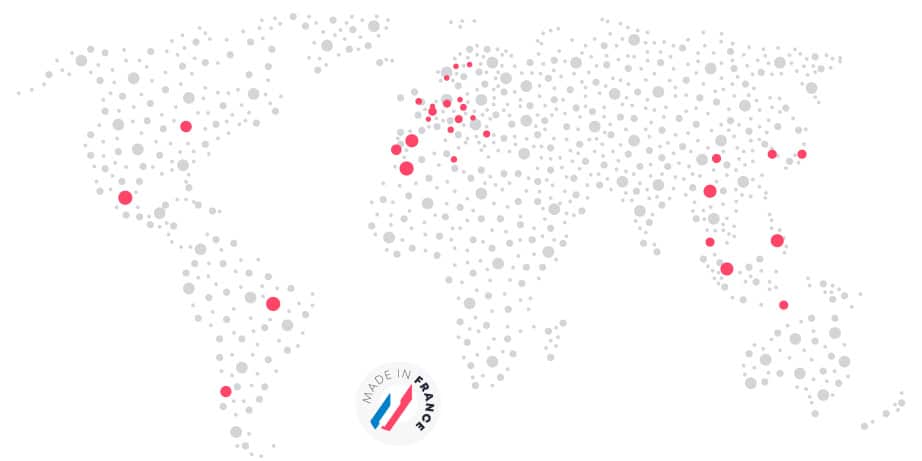
Made in France
All of our products are devised, designed and manufactured at our French site located in Juvigny in Haute Savoie. This is to make sure we offer products of exceptional quality.
We manage all of our business in local and international markets from this site. The presence of various partners on all the continents means we can extend our area of action and offer you effective local services anywhere in the world.
We’re ready for your future
A member of the Industry of the Future Alliance and recognized as suppliers of industry 4.0 solutions, we’re also stakeholders committed to the future 4th industrial revolution.