French experts in welding and cutting technologies
Find out about our 6 welding technologies
The Industry of the Future
Our industrial plant is located in Juvigny in France
The ultrasonic insertion: a precise way to reinforce plastics
The ultrasonic insertion process offers manufacturers a reliable method for embedding metal inserts into plastic components. By using ultrasonic energy to soften a targeted area of the polymer, inserts such as threaded bushings or pins are fixed firmly into place. The result is a lightweight plastic part strengthened with metal features, combining ease of assembly with long-term durability.
The principle of ultrasonic insertion explained clearly
To understand why ultrasonic insertion is so effective, it is important to look at the physical principle behind it. Ultrasonic vibrations generate localized heat at the interface of the insert and the plastic, allowing the metal to slide in smoothly. Once the vibrations stop, the plastic resolidifies and locks the insert into place, ensuring a permanent fit.
The main steps of the insertion process
The insertion cycle follows a well-orchestrated sequence, each stage contributing to consistency and joint strength:
- the insert is placed above a pre-molded pilot hole in the plastic component, ensuring proper alignment from the start;
- ultrasonic vibrations are delivered through the horn, generating controlled heat exactly where the metal meets the polymer;
- the softened plastic flows around the grooves, knurls, or undercuts of the insert, filling every recess;
- pressure from the actuator ensures the insert reaches its correct depth without damaging the surrounding material;
- the vibrations stop and the plastic cools instantly, producing a secure, high-strength bond ready for use.
The essential equipment and tooling
Behind this apparently simple process lies a combination of specialized equipment. Each component of the ultrasonic insertion setup plays an important role:
- the ultrasonic generator provides consistent energy output at a controlled frequency, ensuring reliable process stability;
- the converter and booster transmit vibrations from the generator to the horn with minimal loss;
- the insertion horn guides the insert into the plastic, applying both vibration and pressure smoothly;
- the fixture holds the plastic part securely, guaranteeing repeatable alignment and preventing energy loss.
This equipment can be configured as a benchtop system for manual assembly or integrated into automated lines for large-scale production.
The benefits of ultrasonic insertion for manufacturers
Many industries have adopted ultrasonic insertion because it combines speed, cleanliness, and performance. Compared to adhesives, press-fitting, or heat staking, this technology delivers superior results in demanding applications.
The mechanical strength of reinforced assemblies
One of the greatest advantages of ultrasonic insertion is the mechanical performance of the resulting joint. Inserts are designed with grooves and knurls that anchor firmly into the surrounding polymer:
- the pull-out resistance is high, which means inserts remain stable even when exposed to repeated loading;
- the torque resistance is equally strong, allowing screws to be tightened and loosened multiple times without damaging the plastic;
- the combination of plastic and metal provides the perfect balance between lightweight design and long-lasting strength.
The productivity gains from a fast and clean process
Ultrasonic insertion is not only effective but also highly efficient. Cycle times are short, usually just a few seconds, and the process is easy to integrate into fast-paced production lines:
- no adhesives or secondary materials are required, simplifying logistics and reducing production costs;
- heat is generated only in a small, localized zone, avoiding burn marks or deformation of the plastic part;
- the instant cooling of the polymer means assemblies can be handled immediately without waiting time.
The flexibility of integration across industries
One of the most appealing qualities of ultrasonic insertion is its adaptability. The process fits into very different manufacturing environments, from heavy-duty automotive production lines to highly regulated medical device assembly and delicate consumer electronics. Its ability to deliver consistent results across such diverse applications explains why it has become a trusted fastening method worldwide.
The automotive industry with durable fastening solutions
In the automotive sector, this method supports the growing use of lightweight plastics without sacrificing strength. Inserts create secure fastening points for dashboards, door panels, center consoles, and under-hood components. The joints resist vibration, thermal cycling, and repeated assembly operations, ensuring that parts remain stable over the vehicle’s lifetime. For electric vehicles, ultrasonic insertion also strengthens housings and brackets that must endure demanding conditions.
The electronics sector with precise and clean assemblies
Electronics manufacturers depend on ultrasonic insertion to integrate metal inserts into housings for laptops, smartphones, and connected devices. Because the process generates localized heat only, delicate circuits and sensitive components remain protected from damage. The method guarantees strong fastening points in thin plastic shells while preserving cosmetic appearance—an essential factor for high-end consumer devices.
The medical and technical equipment sector with sterile connections
In the medical and technical equipment industries, ultrasonic insertion provides both strength and sterility. Devices such as diagnostic instruments, surgical tools, and patient-monitoring systems often require threaded inserts to allow repeated assembly and disassembly. Since the process does not introduce adhesives or chemicals, it reduces contamination risks while meeting stringent regulatory standards. The ability to store validated process parameters also supports traceability and compliance.
The design guidelines for successful ultrasonic insertion
The success of ultrasonic insertion depends largely on part and insert design. Small details in geometry make the difference between a strong joint and an unreliable one.
The features of inserts that ensure retention
The design of inserts is carefully engineered to optimize anchoring in plastic. Certain shapes and patterns encourage molten polymer to flow and grip securely:
- knurled surfaces provide multiple edges that trap polymer, improving pull-out strength;
- undercuts or helical grooves increase torque resistance, making screw joints more reliable;
- tapered entry points guide the insert into place smoothly, preventing stress cracks during insertion.
The preparation of plastic components for insertion
The plastic host part must also be designed with ultrasonic insertion in mind. Specific dimensions and material choices help guarantee stable results:
- the pilot hole should be sized slightly smaller than the insert, ensuring a tight fit once the plastic melts;
- the wall thickness around the hole must be sufficient to resist the pressure of insertion;
- polymers with good melt flow, such as ABS, PC, or PA, respond best to ultrasonic energy, delivering clean and repeatable results.
The quality assurance methods in ultrasonic insertion
To maintain consistent performance, ultrasonic insertion must be monitored and validated with reliable quality checks. Each weld cycle is subject to parameters that can be measured and controlled.
The process control through vibration and force
Machine settings are central to repeatable results. Amplitude, frequency, and applied force need careful adjustment:
- insufficient amplitude can prevent proper seating of the insert, weakening the joint;
- excessive vibration may damage the part or over-melt the polymer;
- controlled downforce ensures the insert is fully embedded without creating cracks or stress points.
The validation and testing procedures
Verification tests confirm that the process delivers assemblies fit for use. Manufacturers rely on both destructive and non-destructive methods:
- torque and pull-out tests measure mechanical resistance under real operating conditions;
- visual inspection checks seating depth and surface finish to ensure cosmetic quality;
- statistical process control detects variations in production before they affect quality.
With Mecasonic, ultrasonic insertion gains precision, speed, and full traceability
Bringing the above principles into production requires equipment that can meter ultrasonic energy precisely, control force and depth, and fit a variety of workcell layouts. Drawing on decades of ultrasonic know-how, MECASONIC delivers a complete toolkit for embedding metal inserts in thermoplastics with speed, cleanliness, and repeatability.
At the heart of the ultrasonic insertion solutions, the Omega 4 press family brings press accuracy and process control to the insertion:
- Omega 4 A+ offers intuitive time/energy modes and includes Mecasonic’s exclusive Reactive Welding System (RWS) to adapt the cycle to part behavior. This feature is available as a desktop and base/modular integration
- Omega 4 X adds proportional-valve pressure control, up to 12 welding phases, multi-head availability, and Industry 4.0 connectivity (Ethernet, OPC UA, VNC, USB) for traceable insertion programs and PLC dialogue. This feature is available as a desktop, base/modular integration, soundproof cabin, or full workstation.
For station assembly or hard-to-reach areas, Mecasonic’s ultrasonic gun supports time, energy, continuous and mixed modes (including the Reactive Welding System), with dynamic amplitude control and an on-board 4.7″ touchscreen. It is designed for spot tasks and riveting, making it a common choice for insert setting on benches or light fixtures where agility matters.
On another hand, for manual assembly Mecasonic’s ultrasonic handgun delivers precise, fast cycles that are particularly well suited to insert setting and riveting. its low mass and ergonomic design make it easy to handle and to deploy across multiple assembly stations.
The Pulse One and Pulse Touch generators supply the acoustic stack for both handheld and press systems, with integration features (digital I/O, RS485) and a 4.7″ touchscreen on Pulse Touch. Mecasonic’s official range covers 20/30/40 kHz classes with power from 400 W to 3 000W, suitable from small M2 inserts up to larger brass bushes depending on plastic and geometry.
To scale cells and special machines, compact modules such as ML 40, ML 32, and UBC—combined with acoustic assemblies and Meca-Sequence control—let integrators build single- or multi-insert heads, rotary tables, or robot-tended fixtures without changing process foundations. These elements drop seamlessly into sound-damped workcells with indexing or multi-head tooling, allowing manufacturers in automotive, electronics, and medical devices to ramp from prototypes to high-volume insertion with the same reliable, low-defect process.
Our technologies
To meet our customers’ needs, we’ve developed different techniques which are specific to each field of application and adaptable to each project. We now offer ultrasonic, spin, hot air/thermal, hot plate, vibration and laser welding solutions.






Our fields of application
Our leadership in plastic welding and ultrasonic cutting comes from our ability to innovate and meet the expectations of our customers in sectors like the automotive industry, cosmetics, household appliances, electronics, recreation and leisure, medicine, packaging and the textile industry as well as in non-ferrous metals, the agrifood industry and many more.
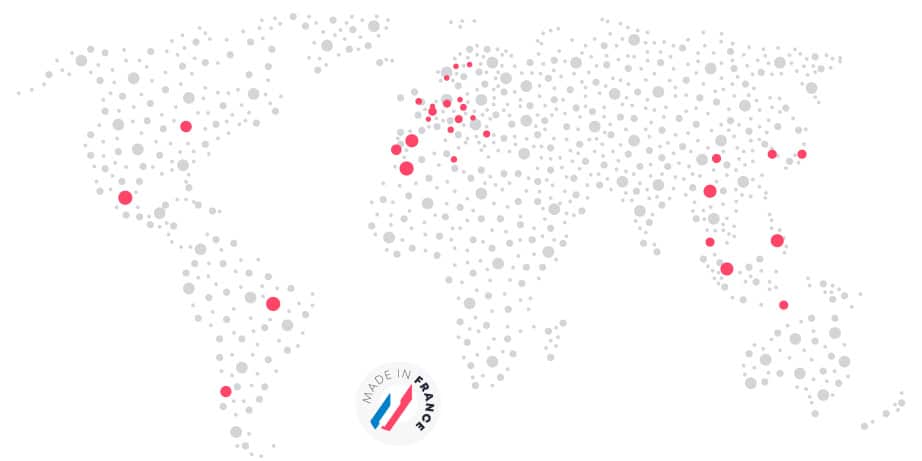
Made in France
All of our products are devised, designed and manufactured at our French site located in Juvigny in Haute Savoie. This is to make sure we offer products of exceptional quality.
We manage all of our business in local and international markets from this site. The presence of various partners on all the continents means we can extend our area of action and offer you effective local services anywhere in the world.
We’re ready for your future
A member of the Industry of the Future Alliance and recognized as suppliers of industry 4.0 solutions, we’re also stakeholders committed to the future 4th industrial revolution.